





Reps urge FG to save Bayelsa petrochemical project from erosion
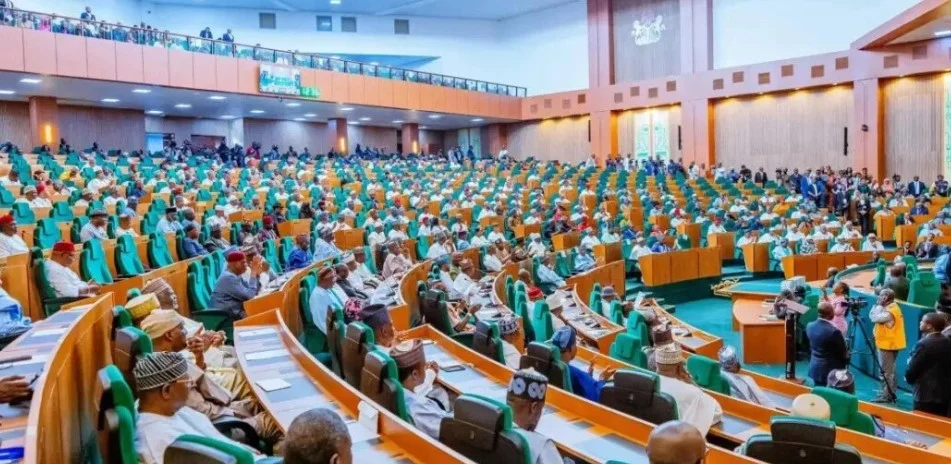
The House of Representatives on Tuesday urged the Federal Government to deploy resources from the Ecological Fund to halt shoreline erosion threatening a major indigenous petrochemical investment in Bayelsa State.
The call followed the adoption of a motion of urgent public importance sponsored by the member representing Yenagoa/Kolokuma/Opokuma Federal Constituency, Oforji Oboku.
Addressing his colleagues, Oboku warned that continued erosion at the Eraskorp Industrial Park in Gbarain, Yenagoa Local Government Area of Bayelsa State, could undermine years of investment and derail a project expected to boost Nigeria’s manufacturing sector.
He described the Eraskon Lubricants/Chemicals Blending Plant as a strategic private-sector investment designed to reduce Nigeria’s dependence on imported lubricants and chemical products while supporting the country’s industrialisation and economic diversification agenda.
He said, “The Eraskon Lubricants/Chemicals Blending Plant Project is an indigenous investment in the petrochemical industry located at the Eraskorp Industrial Park, Gbarain, Bayelsa State. It is a strategic private-sector investment aimed at promoting local manufacturing, reducing dependence on imported lubricants and chemical products, and advancing Nigeria’s industrialisation and economic diversification agenda.”
The lawmaker explained that the facility includes a lubricant and chemical blending plant with a production capacity of 128,000 litres per day, as well as an aerosol manufacturing plant and a carton production factory.
According to him, before shoreline erosion severely affected the site, construction had reached an advanced stage, with major equipment already procured and installed.
He told the House that “before the devastating impact of shoreline erosion, the project had recorded significant progress, with major equipment procured and key infrastructure at advanced stages of completion.”
Oboku warned that the environmental damage has significantly delayed the project and placed the investment at risk.
“Severe shoreline erosion has caused extensive damage to the project site, delayed the project, and threatens the viability of this important national investment,” he added.
The Bayelsa lawmaker disclosed that the Integrated Manufacturing Complex building, which had reached about 75 per cent completion, had to be dismantled after erosion exposed and destroyed its foundation piles and shoreline protection structures.
He further noted that virtually all the process equipment required for the plant had already been delivered to the site, while work on several critical components of the project was nearing completion before the erosion worsened.
He added, “All process equipment for the plant has already been procured and is on site. The Integrated Manufacturing Complex building superstructure is 75 per cent completed, the roofing of the building is about 40 per cent completed, while the base oil storage tanks were approximately 70 per cent completed.”
Oboku argued that abandoning the project would have serious economic consequences, noting that it is expected to create more than 200 direct jobs and over 1,000 indirect employment opportunities upon completion.
He added that the facility would also stimulate the growth of small and medium-scale enterprises, expand local manufacturing capacity and generate additional revenue for both Bayelsa State and the Federal Government.
Relying on Sections 14(2)(b) and 16 of the 1999 Constitution (as amended), which mandate government to promote national prosperity, industrial development and protect investments that drive economic growth, the lawmaker urged the Federal Government to intervene without delay.
Following the adoption of the motion, the House called on the Federal Government to direct the Secretary to the Government of the Federation to utilise the Ecological Fund to finance shoreline protection and erosion control works at the Eraskorp Industrial Park and surrounding communities in Gbarain.
The House also mandated its Committee on Ecological Fund to facilitate the implementation of the resolution and report back within six weeks for further legislative action.
Shoreline erosion remains one of the most persistent environmental challenges confronting communities across the Niger Delta, where rising water levels, coastal degradation and recurrent flooding have destroyed homes, public infrastructure and private investments.
Industry stakeholders have repeatedly called for greater investment in erosion control and shoreline protection, warning that unchecked environmental degradation continues to discourage investment and slow industrial development in the oil-producing region.
All rights reserved. This material, and other digital content on this website, may not be reproduced, published, broadcast, rewritten or redistributed in whole or in part without prior express written permission from PUNCH.
Contact: [email protected]
Stay informed and ahead of the curve! Follow The Punch Newspaper on WhatsApp for real-time updates, breaking news, and exclusive content. Don’t miss a headline – join now!
Stay in the know—fast. Get instant alerts, breaking headlines, and exclusive stories with the Punch News App. Download now and never miss a beat.
Source: Punch Newspapers – Latest News