





Nigeria has talents for global circus industry — National Theatre GM
The General Manager of the National Theatre, Tola Akerele, has said Nigeria has abundant but largely untapped talent capable of helping the country establish a presence in the global contemporary circus industry.
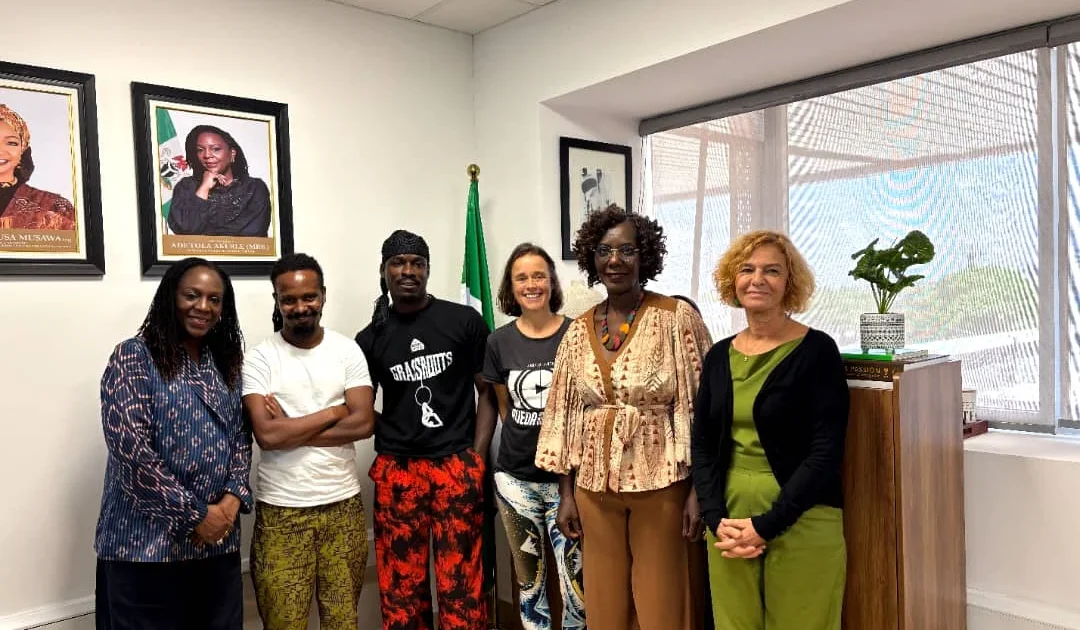
Akerele spoke during the unveiling of the Lagos Contemporary Circus Festival, slated for Saturday and Sunday, at a press conference held on Friday at the National Theatre, Surulere, Lagos.
PUNCH Online reports that circus is an art, craft and sport that combines different disciplines, including theatre, dance, juggling and acrobatics.
Akerele said Nigeria’s rich cultural heritage, traditional dances, acrobatics and other forms of physical performance provided a strong foundation for the development of a homegrown circus industry.
Speaking on the development of contemporary circus in Nigeria, she said the country had long practised elements of the art form without formally recognising them as circus.
“Circus is really a type of art that gathers many, many fields or many, many different types of craft, like theatre, dancing, juggling, acrobatics and sport. It is art, craft and sport,” Akerele said.
She noted that several traditional performances in Nigeria, particularly in the North, involved acrobatics, movement and dance, which could be developed further through contemporary circus.
“In the North, what we have are animals, animals, people masquerading. There’s something there already. So, they’re not animals; it’s more about acrobatics, movement and dance. And I think we have that natural talent anyway,” she said.
According to the National Theatre boss, the challenge was to identify existing talent, expose performers to international techniques and create opportunities for them to develop their skills professionally.
“So, I think for me, it was something that I felt we could really develop in Nigeria. And, of course, someone like Sam has been doing this here for a while. But there are opportunities that are actually really big for Nigerians who are in that performance space to gain more skills, to work with other countries and to really elevate what’s on the ground,” she said.
Akerele said the initiative was aimed at laying the foundation for a more structured circus sector in Nigeria.
“I just felt like a lot’s been done, but there’s so much more that we can do. And this is what this is about, really kind of laying, just putting the foundations down for what could be, which is really exciting,” she said.
She explained that contemporary circus was still relatively new to many Nigerians, despite incorporating familiar forms of performance such as dance and acrobatics.
Akerele said Nigeria could learn from countries across Africa where circus had developed into an established form of performance, while also developing its own identity.
She added that the development of the circus industry could create employment and provide young Nigerians with alternative career opportunities.
“We want to create jobs, have new skills, so that’s why we’re kind of doing this,” she said.
She added that becoming a circus performer could be a viable career for Nigerians willing to dedicate themselves to the craft.
“So, I think, economically, it’s a career path, actually. You can actually become a circus performer, and you can earn and survive. So, we’re having some talks after that about having a career in the circus,” Akerele said.
According to her, some Nigerians were already practising circus disciplines such as juggling and contortion but lacked the structures and community needed to develop their skills further.
“There are people in college, people are doing it here, as a contortionist, as a juggler, on his own at home, doing it. But let’s create a community,” she said.
The founder of La Fabrique Culturelle, Chantal Djedje, supported the argument that Africa already had a strong foundation for circus, saying traditional dances and movements across the continent contained elements of the art form.
“Our traditional dances, our traditional movements, all over the continent, are circus. But as long as it’s not on stage, we call it traditional art. But once the Europeans put it on stage, we call it circus,” Djedje said.
She said the perception that Africa had no circus stemmed partly from how traditional African performances were classified.
Djedje also pointed to street performers in Lagos as evidence of the talent available locally.
“But even here in Lagos, if you go out, all the people we’re seeing are doing circus, because it’s not easy just to walk with these things on your head. This is circus, you know? So, even in Lagos, you have a pool of artists,” she said.
Djedje cited Guinea as an example of how circus could provide young people with a pathway into professional careers.
“In Guinea, when the social crisis started, it took a lot of kids from the streets. Today, it’s these kids who are in the biggest circus companies in the world: Circus Baobab, Cirque du Soleil,” she said.
“It’s a very good opportunity for those kids who usually don’t go to school anymore. And suddenly, they can pick up a career. And there’s a real career path for them.”
The co-founder and Artistic Director of Fekat Circus, Dereje Dange, said the development of a successful circus industry required discipline and persistence.
Dange said Ethiopia’s circus sector had grown considerably after starting from a small base, with performers eventually finding opportunities to work around the world.
“It’s become really a lot of, like, thousands of artists now you see all over the world performing and getting also a living,” he said.
He said the experience showed that circus could develop from a small initiative into a professional industry capable of supporting performers.
Meanwhile, Swiss circus artist Jessica Arpin said circus had room for people with different body types, physical abilities and interests.
“What’s beautiful about the circus is that there’s space for everybody,” Arpin said.
“If you’re stronger, you can carry somebody. If you’re more flexible, you can do more contortion. If you like heights, you can go aerial.
“If you’re better with the hands, you can juggle. Like, there’s space for all kinds of bodies and sizes.”
Arpin, who said she was 47, also stressed the importance of discipline and taking care of the body for performers seeking long-term careers.
“Maybe you’re naturally talented, but your body is your tool. So, you have to take care of your body so it lasts a long time. So, you can work a long time,” she said.
The press conference came amid efforts to promote contemporary circus in Nigeria through collaboration among Nigerian and international artists, with support from the European Union.
All rights reserved. This material, and other digital content on this website, may not be reproduced, published, broadcast, rewritten or redistributed in whole or in part without prior express written permission from PUNCH.
Contact: [email protected]
Stay informed and ahead of the curve! Follow The Punch Newspaper on WhatsApp for real-time updates, breaking news, and exclusive content. Don’t miss a headline – join now!
Stay in the know—fast. Get instant alerts, breaking headlines, and exclusive stories with the Punch News App. Download now and never miss a beat.
Source: Punch Newspapers – Latest News