
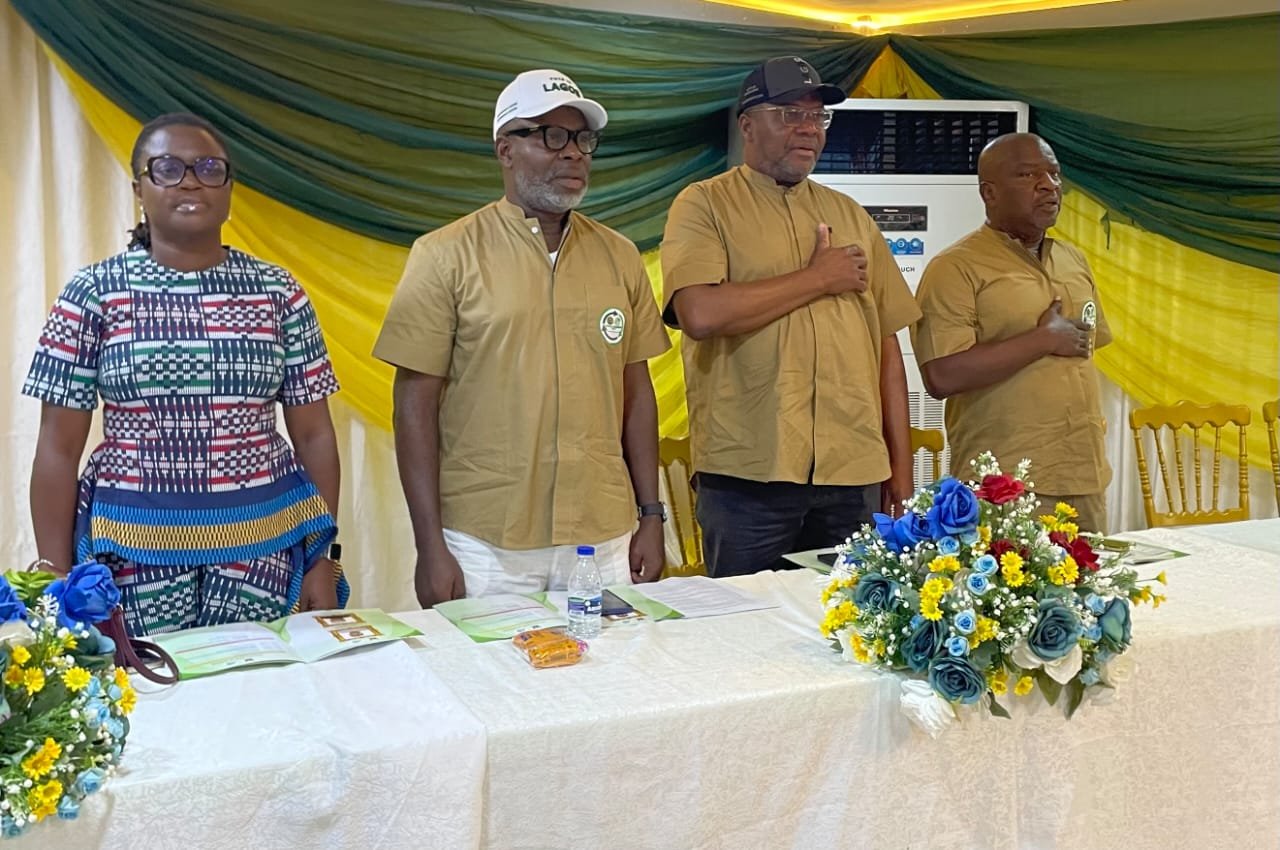




Researchers, farmers, environmental advocates and Lagos State officials are calling for a shift from waste collection and disposal to community-based systems that turn food and other discarded materials into resources that can create livelihoods, protect public health, reduce flooding and support urban farming.
The call was made during the 2026 World Cleanup Day, themed “From Clean Plates to Clean Cities”. Findings from an African Cities Research Consortium (ACRC) study in Ajegunle-Ikorodu showed that food waste, although often overshadowed by plastic, poses significant health and environmental risks in communities with limited access to formal waste collection.
The study found that rapidly decomposing organic waste can block drainage channels and contribute to conditions associated with flooding and disease transmission, highlighting how waste management challenges intersect with public health, climate resilience and food systems in Lagos.
Stakeholders at the gathering called for stronger government-community-private sector collaboration, improved waste separation at source, wider adoption of composting and resource recovery, and dedicated government funding to replicate community waste hubs across Lagos.
Related Posts:
- FULL TEXT: Dapo Olorunyomi’s lecture at Ajayi Crowther University on Nigerian journalism
- From Borno to Oriire: 2,573 abducted in 31 violent Nigerian school attacks over 12 years
- Unsafe, Unprotected: Oyo schoolgirls suffer in silence over lack of menstrual facilities
- WASSCE 2026: 1.2m candidates secure required credits as performance drops
Study reveals waste, flooding and health risks are interconnected
Between April and June 2026, researchers and trained community scientists collected and hand-sorted waste from different locations in Ajegunle-Ikorodu into six material categories.
The research combined household surveys across three community development associations, focus group discussions involving landlords, tenants, women, youths and informal waste pickers, key informant interviews and physical waste quantification.
The researchers found that many households in the settlement lacked formal waste collection. Narrow streets make it difficult for conventional compactor trucks to access parts of the community, while an earlier attempt to introduce a collection fee collapsed after residents considered the proposed charge unaffordable.
The community also experiences seasonal flooding, with blocked drainage identified as a major contributing factor. Residents in affected areas reported frequent waterborne diseases.
The Lagos City Manager of ACRC, Temilade Sesan, noted that the findings demonstrate why environmental challenges cannot be treated as isolated problems.
“Two of our four action research projects in Lagos are in the same settlement. One arrived asking about climate, the other about waste, and they met at the same canal,” she said.
Mrs Sesan explained that waste blocks drainage, blocked drainage contributes to flooding, while flooding exposes residents to climate and health risks.
She said the experience reinforced ACRC’s approach of examining the connections between different sectors rather than treating waste, housing, climate, food and health as separate issues.
“We need to think in a very interconnected manner,” she said, stressing that there are links between food and waste, waste and energy, housing and transport, and several other urban systems.
From illegal dumpsite to community food system
To demonstrate an alternative, the research team converted an open space that was becoming an illegal dumpsite into an integrated community hub.
Residents bring recyclable materials to the facility and receive cash payments, while food waste is processed through a three-chamber composting system. The resulting compost is used to grow food at the site, while recovered plastic is used for farm structures and irrigation.
The facility is operated by community members on a rotating basis, with informal waste pickers engaged to supply recyclable materials and food waste.
Mr Akinpelu said the intervention was designed to demonstrate how spaces commonly used for indiscriminate dumping could become productive community assets.
“The material with the most money in it is plastic. The material doing the most damage is food,” he said.
According to him, Lagos has developed a growing recycling economy around plastic but has paid comparatively less attention to food waste, particularly during the rainy season.
He said the model would require regulatory approval, reliable markets for compost and dedicated public funding to expand.
The researcher urged local governments and Local Council Development Areas (LCDAs) to make land available for community hubs, replicate the model and integrate informal waste pickers into the system.
He also called for standardisation of community composting facilities and a policy framework defining their environmental requirements.
ACRC further urged the Lagos Waste Management Authority (LAWMA) and Lagos State Environmental Protection Agency (LASEPA) to create a licensing category for community-scale waste hubs, develop policies addressing food waste and establish a procurement framework for certified community compost.
Lagos government backs waste-to-resource approach
The Lagos State Government said its approach to waste management is gradually moving beyond collection and disposal towards resource recovery.
The Permanent Secretary, Office of Environmental Services, Lagos State Ministry of Environment and Water Resources, Gaji Tajudeen, said the responsibility for a clean city begins with individuals and households.
“A clean city does not start at the dump site or with government trucks. It starts in our kitchens with our own plates,” Mr Tajudeen said.
He urged residents to reduce food waste, sort refuse at source and prevent littering, particularly in drainage channels and public spaces.
According to him, proper waste segregation would help keep drainage systems clear, improve public health and create opportunities within Lagos’ circular economy.
“When households and vendors manage their waste responsibly, our drainage systems remain clear, our roads stay clean, and our public health improves,” he said.
Mr Tajudeen said recycling and resource recovery could also create green jobs and strengthen the state’s environmental resilience.
He commended ACRC, private-sector partners and other stakeholders involved in the initiative, urging Lagos residents to extend the discipline of maintaining clean homes to public spaces.
The Special Adviser to the Governor on Environment, Olakunle Rotimi-Akodu, said the state’s environmental strategy was increasingly focused on systemic change rather than one-off clean-up exercises.
He stressed the need for government, citizens and the private sector to work together, adding that youth participation, partnerships with schools, NGOs and businesses, policy reforms and enforcement remain central to tackling pollution at its source.
Mr Rotimi-Akodu said Lagos was already experimenting with ways to turn food waste into useful resources.
He cited an initiative at a coastal food market where food waste is converted into energy used within the market, as well as programmes in schools designed to teach children how to manage and compost food waste.
“The cleanest form of waste is zero waste. It’s not to generate any waste at all,” he said, adding that where waste is generated, it should be processed into useful resources rather than sent directly to landfills.
He said the state had also entered an agreement with ZoomLion to convert waste into wealth, with organic waste processed into compost manure and plastic waste converted into granules.
Additionally, he said the state was working towards a waste management system focused on resource recovery, with the goal of substantially reducing the amount of waste eventually requiring disposal.
Agriculture ministry links waste management to food security
The Ministry of Agriculture and Food Systems said responsible food production and waste management must be treated as part of the same environmental and food-security agenda.
Representing the ministry, Olayemi Ibrahim conveyed goodwill messages from the Commissioner for Agriculture and Food Systems, Abisola Olusoya; the Special Adviser to the Governor on Agriculture and Food Systems, Oluwarotimi Fashola, and the Permanent Secretary, Emmanuel Patae-Audu.
Mr Ibrahim said everyone involved in the food chain had a responsibility to ensure that food production, processing, transportation, consumption and disposal did not undermine the environment.
He noted that organic waste should not simply be regarded as material for disposal but as a resource that could be reduced, reused, recycled or composted.
“For a megacity like Lagos State, with its growing population and complex food system, achieving and maintaining a clean city cannot be the responsibility of the government alone,” he said.
He added that better management of organic waste could support cleaner communities, healthier food production and improved resource utilisation.
Farmers seek compost alternatives to synthetic fertilisers
The Chairman of the Farmers Association of Nigeria, Sakin Agbayewa, connected the waste discussion directly to agriculture, arguing that food waste could become an input for farmers rather than a burden on communities.
Mr Agbayewa said compost produced from properly managed organic waste could reduce farmers’ dependence on synthetic fertilisers, lower production costs and improve soil health. “If we can use our waste, we convert it to organic waste. And the next thing is fertiliser,” he said.
He argued that compost could provide an alternative source of nutrients while creating economic opportunities for people involved in collecting, processing and selling waste.
He called for stronger collaboration between the farmers’ association and the Ministry of Environment, including efforts to encourage farmers to participate in waste collection.
Mr Agbayewa also proposed establishing facilities at the local-government level where farmers could access compost and other products derived from waste.
He linked the issue to food security, describing food insecurity as a national threat and urging the government to view waste-to-agriculture initiatives as both environmental and economic interventions.
Civil society calls for behavioural change from markets to schools
Also speaking at the gathering, the Founder of FABE Foundation, Temitope Okunnu, said reducing food waste would require changes in consumer behaviour as well as new infrastructure.
She challenged consumers to reconsider their preference for visually perfect fruits and vegetables, arguing that edible produce is often discarded because it does not meet aesthetic expectations.
Mrs Okunnu said food waste occurs at several points between markets, homes, restaurants and farms and that consumers are part of the system that determines what eventually becomes waste.
She advocated separating organic waste from plastics and other materials at the point of generation and developing stronger links between markets producing food waste and farmers who need compost.
She also highlighted the foundation’s EcoSchools initiative, through which children are taught to separate waste, compost food waste and turn discarded materials into reusable or economically valuable products.
According to her, some participating schools have moved beyond composting to using the resulting material to grow food and develop small green enterprises.
“We need to begin to think differently. Systems thinking is important,” she said, urging stakeholders to move from discussions to practical action.
ACRC seeks 2027 funding for community waste hubs
While the Lagos government highlighted ongoing programmes, ACRC said further institutional support would be required to take community-based interventions to scale.
Mr Akinpelu said the research team was seeking government budgetary support ahead of the 2027 fiscal planning process for the establishment of more community recycling and composting hubs.
He proposed a “One Ward, One Hub” model in which communities would provide suitable land while the government would support the establishment of low-cost facilities.
“We are at a good time as we prepare for the Lagos State government budget,” he said, urging the government to consider dedicated funding for community recycling hubs across Lagos.
He said the model could simultaneously address waste collection gaps, create livelihood opportunities for informal waste workers, support urban farming and reduce the amount of waste reaching dumpsites.
Mrs Sesan said ACRC’s approach was not simply to implement interventions but to research what works, understand why it works and use the evidence to improve policy and implementation.
She said the organisation was engaging government and policy stakeholders to ensure that research findings could inform evidence-based policies.
The Ministry of Environment has already begun replicating elements of the community hub model in other parts of Lagos, according to the research team.
For Lagos, the challenge now extends beyond mobilising residents for an annual clean-up.
Author
-
Sodiq Mojibola is a Nigerian-based multimedia journalist. He has experience covering metro and environment beats.
Source: Development Reporting